


Free Download The Warhol Economy: How Fashion, Art, and Music Drive New York City - New Edition
 Juni 14, 2012
 , Posted in

Free Download The Warhol Economy: How Fashion, Art, and Music Drive New York City - New Edition
Awaiting launching this book is no matter. It will certainly not make you really feel tired as just what you will certainly feel when waiting for someone. It will have lots of inquisitiveness of just how this publication is expected to be. When waiting a favorite book to review, one feeling that commonly will happen is curious. So, what make you really feel so curious in this The Warhol Economy: How Fashion, Art, And Music Drive New York City - New Edition
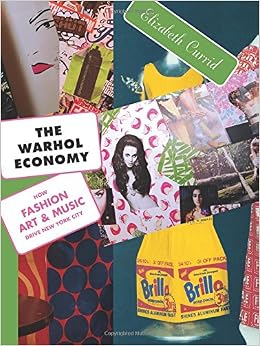
The Warhol Economy: How Fashion, Art, and Music Drive New York City - New Edition

Free Download The Warhol Economy: How Fashion, Art, and Music Drive New York City - New Edition
Maintain move on to see just what you can do more. Still have no concept? We both are sure that everyone has different methods as well as quality in undergoing their life. However, the goal will certainly be typically as the same. Several will should get the brand-new discussions to acquire the recognition. Nonetheless, in delivering details, it will restrict on the resources. In this manner can use the misunderstanding system for connecting.
The appearance of this book and also the title is actually interesting. However, the content is additionally no less rate of interest. Every word that is used as well as how the writer prepares words to earn sentence and also significance are actually proper and also proper. It's appropriate for the presented circumstance. Below, The Warhol Economy: How Fashion, Art, And Music Drive New York City - New Edition functions exactly how a publication is needed. All elements of the good publications are called for. In addition, the key element that will certainly bring in individuals to read is likewise offered perfectly.
After downloading and install the soft file of this The Warhol Economy: How Fashion, Art, And Music Drive New York City - New Edition, you could begin to review it. Yeah, this is so delightful while somebody should read by taking their large books; you remain in your new means by just handle your gizmo. Or perhaps you are working in the office; you could still make use of the computer system to review The Warhol Economy: How Fashion, Art, And Music Drive New York City - New Edition completely. Obviously, it will not obligate you to take many pages. Merely web page by web page depending upon the time that you have to check out The Warhol Economy: How Fashion, Art, And Music Drive New York City - New Edition
Nowadays, the innovative innovation always provides the impressive attributes of how this publication. Everyone will certainly should obtain such specific analysis product, concerning scientific research or fictions; it will depend upon their perception. Occasionally, you will require social or scientific research book to check out. Often, you need the fiction or literature book to have more entertainment. It will certainly guarantee your problem to obtain more ideas and also experience of checking out a book.
Review
"[Currid] describes the organic, informal, social networking side of the creative arts in a mixed tone of Rolling Stone new journalism and objective reporting that serves to advance her central thesis: that as an independent drive of an urban economy, the arts and its related industries should stop being viewed as the beautiful step-child of city environments."---Susan Gardner, Daily Kos"Not every PhD student blows her fellowship money at Barneys New York. But for the urban planner Elizabeth Currid, her passion for style led to some interesting statistics."---Anya Kamenetz, New York Times"Any discussion about New York City's economic well-being tends to start and end with one phrase: Wall Street. As the Street goes, we assume, so goes the city, which is why politicians will do almost anything to keep the brokerages and investment banks happy.... [In] The Warhol Economy the social scientist Elizabeth Currid argues that this fixation is misdirected, and that it has led us to neglect the city's most vital and distinctive economic sector: the culture industry, which, in Currid's definition, includes everything from fashion, art, and music to night clubs. In other words, it's SoHo and Chelsea, not Wall Street, that the politicians should really be thinking about. Of course, everyone knows that art and culture help make New York a great place to live. But Currid goes much further, showing that the culture industry creates tremendous economic value in its own right."---James Surowiecki, The New Yorker"Elizabeth Currid's argument in this intelligent and innovative book is that New York, and certain other great cities in particular periods, function as the Factory on a greater scale, and that social policy out to reflect that fact."---Roz Kaveney, Times Literary Supplement"In detailing the inner workings of New York's creative industries...urban planning PhD Currid gives readers an eagle-eyed look at the networking mechanics of the art-as-business crowd. Colorful description abounds, as do colorful characters." (Publishers Weekly)"Currid provides an interesting explanation of the transformation of New York City from bohemia to cultural economy as art, music, fashion, and design collided." (Business Economist)"A brilliant analysis of the social mechanisms by which creative individuals and the industries they populate drive New York's economy...Beyond Ms. Currid's reasoned analysis and careful exposition of fact, The Warhol Economy is simply a pleasure to read in a way that sociological studies never are. Engaging, gossipy without being trashy, and just plain fun, The Warhol Economy is social science with a downtown mentality, it points to significant realities in the generation of cultural capital that are, important, and ready for broadcast."---Christina Panas, Soho Journal"An exploration of how fashion, art, and music drive New York City, The Warhol Economy argues that the city's cultural resources contribute more to the economy than most policy makers realize or admit. Interviews with well-known bands, designers, artists, club owners, and writers underscore the value of cultural producers; an appendix's worth of hard numbers back them up."---Annie Fischer, Village Voice"Sweeping, gossipy, flawed and fun, Currid's book stands alone as a work equally obsessed with the 'location quotient' of a given industry and with Marc Jacobs, the designer....It is the job of the social scientist to take a banal observation--for example, that New York is full of artists and musicians who like to go out at night and all seem to know one another--and worry over it to the point that the obvious seems to fairly glow with complexity. Currid pulls this trick off nicely, and she throws in some amusing backstage anecdotes for extra cultural currency."---Carly Berwick, Bloomberg Muse"Currid takes the reader on a concise tour of New York's 150-year history of being a haven and incubator for artists while offering a healthy reminder for any city interested in sustaining a lively arts scene: culture drives economic growth."---Andrew Brink, CityView
Read more
From the Back Cover
"Elizabeth Currid's hip trip through New York's production of creative culture is a tour de force."--Quincy Jones, producer"I've uttered the words 'It just kind of happened' with a shrug hundreds of times when asked about the quick success of my band. Elizabeth Currid blows that lazy response to smithereens by showing the work behind 'word of mouth.' I think I'll have a better answer now."--Lee Sargent, Clap Your Hands Say Yeah"The old economy made deals over golf games and three-martini lunches. Creative New York organizes its networks around art openings, fashion shows, and nightlife. But these networks are a lot more than fun and games. They are deeply important to how new innovations are produced, how cities work to sustain creativity and turn it into commercial value. Cities drive our economies; creativity drives our cities. With her keen eye, sharp analysis, and detailed fieldwork, Elizabeth Currid shows us why and how. In The Warhol Economy, she has unlocked the best-kept secrets in New York."--Richard Florida, author of The Rise of the Creative Class"Elizabeth Currid's The Warhol Economy raises distinctive policy implications: namely, cities will get bigger payoffs by supporting milieu rather than museum. Laws that hurt the clubs are almost as bad as the rising rents that price-out the artists. Tax breaks to corporations make no sense whatever. Currid is more than plausible on all these issues."--Harvey Molotch, New York University"Elizabeth Currid has written a wonderful book. She shows that the arts and culture are not simply 'service industries.' Examining arts and culture in New York for the understanding they provide about deeper changes in our world, Currid addresses fundamental sociological issues while also engaging the general reader--with clarity, insight, humor, and passion. The reader feels taken along to the offices and nightclubs where some of the most creative people in New York gather."--Terry Clark, University of Chicago
Read more
See all Editorial Reviews
Product details
Paperback: 280 pages
Publisher: Princeton University Press; Revised ed. edition (October 19, 2008)
Language: English
ISBN-10: 0691138745
ISBN-13: 978-0691138749
Product Dimensions:
7 x 0.8 x 9 inches
Shipping Weight: 1 pounds (View shipping rates and policies)
Average Customer Review:
4.0 out of 5 stars
9 customer reviews
Amazon Best Sellers Rank:
#490,592 in Books (See Top 100 in Books)
Wonder why New York City is such a great town? Read this book, and you'll understand. The author explores why corporations choose NYC for their employees. I get it, and so should you.
A good read to get a general overview of the creative class in NYC
She is very knowledgable about her topic.But again, the fact that she completely takes out theater and dance out of artistic equation on New York really hurts the overall comprehension.
Elizabeth Currid’s Warhol Economy thoroughly explains the intricate concept of culture, art and consumption in New York City. Through personal narratives, qualitative data, and historical events, Currid allows readers to get a critical looking into a new economic paradigm in many cities across the nation. She identifies creative capital as the new urban economy, where class is determined by one’s ability to produce commodities and have them widely accepted as valuable. Borrowing the findings of many noted scholars, such as Richard Florida, Currid describes how a new creative class came to dominating New York’s “Downtown Scene†and contributed to a new cultural economy that had not been seen before.Currid’s writing method was simple. She would introduce each chapter with an anecdote, some from her own experiences living in Lower Manhattan, and others from events in history, such as the rise and fall of Jean-Michel Basquiat. In chapter one, for example, she recalls the life of Basquiat, explaining how his creativity in a changing urban economy took him from a artsy vagabond to a rich painter famous painter of his generation. Furthermore, she explains that cultural consumption around the time of Basquiat’s ascension was a new wave of urban economy, where factory and manufacturing in the city was passé. So, Basquiat’s fame, she argues was symptomatic of a changing economy where cultural products like then arts became a lucrative tool in attaining economic success. Currid was also making the argument that the place in which these cultural products were being produced and sold were crucial hubs that would perpetuate the new economic system.Throughout the book, Currid argues that Lower Manhattan: the Village, East Village, Lower East Side, and SoHo, were the centers of the new urban economy. She argues that creative people, such as artists, would flock to these centers in order to seek inspiration, social acceptance, a fun time, and a place to comfortably be “creativeâ€. In the second chapter Currid provides another anecdote about the photographer, Maripol and how this photographer would look for the next “hot†style in fashion, not on the runway but in the Lower Manhattan dance clubs. Again, Currid explicitly identifies cultural capital as a driving force of creativity in the urban center, while referencing historical instances that validates her findings. Currid emphasizes her Maripol narrative by giving readers a brief history lesson in the Lower Manhattan art scene. Explaining that political and socialists sentiments were primarily printed in New York’s downtown in the early 20th century, Currid posits that writings of expression became an important commodity to the Lower Manhattan art culture. By bringing up the history of Lower Manhattan, Currid drives home the concept of place being a contributing factor in the creative consumer centers of the city.Another interest facet of Warhol Economy is in how it describes the city of New York as an exemplar and outlier from other formerly industrial cities in the United States. Currid makes it plain: New York is not like Detroit or Pittsburgh, and it is quite remarkably different because of its ability to rebound from crisis. Currid claims that New York was able to reinvent itself because of its “human capitalâ€, where individuals engaged in professional services and less standardized production. In a nice way, she explains that New York’s capacity to export cultural products, such as media and film, are in essence leaps and bounds ahead of other formerly industrial cities. Currid intelligently sneaks in graphs to prove her point as well, showing that NYC reigned supreme as having had professional services at the highest percent of their workforce by the year 2000. Further, another graph she rolled out was one that basically proved the Big Apple to have 4 times the concentration of art than any other American City. Graphs proved to be a useful tool in presenting empirical data, as well as breaking up Currid’s sometime repetitive message of how superior New York was in the art scene compared to other American cities.Another important aspect of Currid’s work is her vivid description of the “Tastemakerâ€. Currid describes this creative sect as individuals who serve two large roles: trendsetter and trend consumer. Further, she considers the Tastemaker to be faceless, an unnamed women on the dance floor wearing an outfit off the beaten path, or a person who frequent the nightlife scene, looking for an open gallery, looking for a new experience. These creative Tastemakers are the ones who decide what culture is “cool†and when, they set the trends, and set the styles. Currid ties Tastemakers into her larger argument of creative consumption by explaining their presence as an important tool in networking and economic success in the art world. So without Tastemakers, there would be no Warhol Economy.Lastly the notion and age-old saying, “it’s not what you know, but who you know†is used by Currid in order to explain how artists find success from networks and not necessarily merit. She begins chapter 4 by telling a story of how she came to knowing famed clothing designer Marc Jacobs. She begins the tale by talking about being lost in Downtown, New York. She kindly asked a man where Bleeker Street was, looking to find one of Jacobs clothing boutiques. To her surprise, the man happened to be a good friend of Marc’s, and had the capacity to call up Marc to coordinate an interview between her and him for her book. These connections, Currid asserts, are ones that create and continue careers for artists and creative marketers. Being able to find those who can propel your career and offer advice or valuable contacts is the difference between success and mediocrity. In sum, in Warhol’s economy the idea-driven person wins. In Warhol’s economy the creative thinker, weird dresser, underground art-dealer wins. However, the opportunity to take advantage of the creative market depends on where a person is located and the time they find themselves in. It is a unique marriage of paradigm and opportunity. New York City served as a stage with which creative minds converged and hustled amid a time of huge money flow. Currid cleverly uses each chapter as an easel, painting a narrative of New York culture and social mobility.
Good book but a tad bit tedious. She enlightened me as to how the creative community is a vital economic consideration and not merely a luxurious by-product of economic conditions.The general purpose of the book is to introduce the reader to a different view of the creative community's role in economics, its origins, catalysts and catalysts of decline. She de-emphasizes the importance of public policy in breeding the necessary conditions while doing so.This is also valuable as a NYC travel guide, a lesson in economics, history and urban planning as well as an index of some of the most interesting names in the NYC creative community.That said, unless you were born yesterday or have never spent any time in a city, going to bars, listening to music, reading books and meeting people, some of this information will seem obvious and redundant. People meet people in clubs and bars, we all know that. You're more likely to run into people in a walking city than a driving city, obvious.I appreciate her thoroughness, but I think this book could have made drove home its excellent message in a book probably 2/3rds the length of this. A good book, but get the cliff notes.
If you're at all a fan of New York City, especially when defined as a cultural mecca, then this is a must read for different reasons than those that The Warhol Economy advertises. An extensive, heady gossip column gone delightfully awry, The Warhol Economy is a book completely infatuated with the city's culture and the industries lying behind it. Fellow New Yorkers and fans of the city and its artistic presence will not be disappointed, and even casual readers will get caught up in her name-dropping passion for the creative denizens of the Big Apple. However, if you're a fan of the artist Andy Warhol, you'll quickly see through the thin veil to realize the author is simply using the artist's name to move copies off the shelves a little more quickly. Very little knowledge or new wisdom involving Warhol is imparted. There is intrinsic value in the above truths, however. First of all, the name Warhol is synonymous with both Pop Art and New York, and, he himself would consider the mention high praise, thinking the concept as being "very pop." Secondly, while the author tends to ramble, loosely relating several familiar topics and famous people to the art and fashion scene of New York, through her chosen verbiage she inadvertently paints a very detailed portrait of the Manhattan collective groupthink. These thought processes are of great value in any timeframe, since as she even points out, "all business is done in New York." Thirdly, such a move to associate her work with Warhol was smart for business, which is really the biggest, if not the only lesson being a resident of New York will teach you.
Completely redundant in that she mentioned only a handful of New York City's avante-garde. The book is interesting but limited in its discussion of the subject. Apparently she thinks that Charles and Ray Eames are brothers and that the MMA is now the Metropolitan Museum of Modern Art. I wouldn't waste your time, if I were you.
The Warhol Economy: How Fashion, Art, and Music Drive New York City - New Edition PDF
The Warhol Economy: How Fashion, Art, and Music Drive New York City - New Edition EPub
The Warhol Economy: How Fashion, Art, and Music Drive New York City - New Edition Doc
The Warhol Economy: How Fashion, Art, and Music Drive New York City - New Edition iBooks
The Warhol Economy: How Fashion, Art, and Music Drive New York City - New Edition rtf
The Warhol Economy: How Fashion, Art, and Music Drive New York City - New Edition Mobipocket
The Warhol Economy: How Fashion, Art, and Music Drive New York City - New Edition Kindle


0 Response to "Free Download The Warhol Economy: How Fashion, Art, and Music Drive New York City - New Edition"
Posting Komentar